Binaliw landfill reopens amid unresolved issues after landslide
By CRIS FERNAN BAYAGA
CEBU – Three months have passed since the largest landfill landslide in Cebu happened, yet its effects continue to weigh on the lives of residents living near the site.
The disaster, which claimed at least 39 lives, has been linked to administrative and managerial lapses in the operations of Prime Waste Solutions (PWS) Cebu’s Binaliw landfill.
During the executive session of the Cebu City Council on April 28, 2026, PWS Cebu manager Niño Abellana Jr. informed the council that limited operations had resumed a week prior to the session.
Current operations now accept less than 50 metric tons of waste as part of a “test” prior to full resumption. The council was also informed that the Department of Environment and Natural Resources (DENR) Region 7 had given the go-signal for reopening.
DENR partially lifted its cease-and-desist order following the collapse due to amendments made to PWS’s Environmental Compliance Certificate (ECC), allowing specific landfill functions to resume.
However, experts and citizens continue to express concern over the resumption, citing unresolved issues that remain unaddressed by PWS. The reopening this month also proceeded without informing local government units.
On April 10, a forum organized by the UP Center for Integrative and Development Studies (CIDS), the UP Political Science Society (UPPSS), the official student organization of Political Science majors at UP Cebu, in partnership with Greenpeace Philippines, together with progressive labor group Alyansa sa mga Mamumuo sa Sugbo – Kilusang Mayo Uno (AMA Sugbo – KMU) and environmental management experts discussed how the landfill failed.
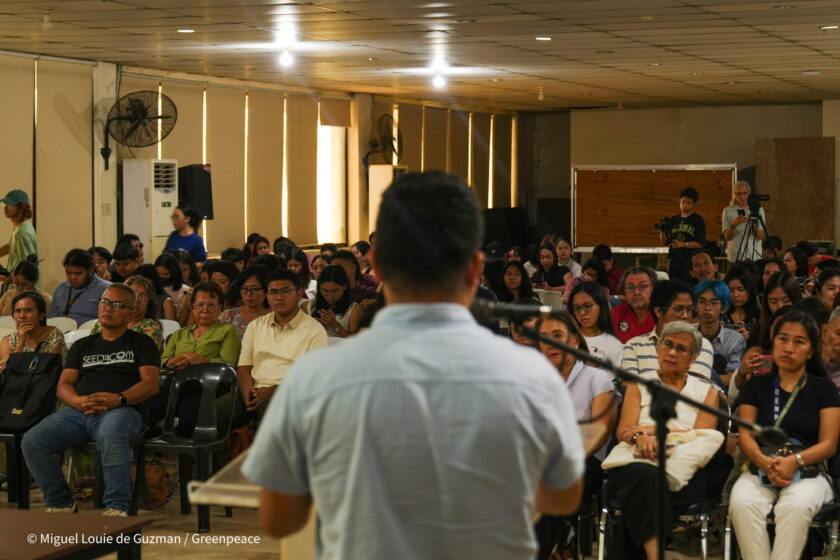
For experts, lives were lost due to a lack of regulation and adherence to fundamental environmental safeguards. Those responsible, they argued, must be held accountable.
As of writing, AMA Sugbo – KMU representative Howell Villacrusis reported that no formal cases have yet been filed against PWS.
However, the DENR said it lifted its cease and desist order (CDO) on the facility due to the city’s need for a functional waste disposal facility.
A tragedy waiting to happen
The absence of strict monitoring mechanisms and transparent reporting protocols, they argued, allowed risks to accumulate and unnoticed over the years.
Villacrusis emphasized that labor issues also played a significant role in the conditions leading to the disaster.
He stressed that during their fact-finding mission, workers reported hazardous working arrangements, inadequate safety protections, and minimal administrative action to address these concerns.
These, he argued, not only endanger workers but also compromise the overall integrity of landfill operations. When labor is undervalued and safety protocols are poorly enforced, the risks of mismanagement and oversight failures significantly increase.
“Prior to the landslide, residents reported a lack of Personal Protective Equipment (PPE), and some workers did not even use gloves when segregating trash. There was no hazard pay, and, worse, no clear emergency protocols in place should such events occur,” he said.
Villacrusis said that an explosion at the site brought down the “20-story high” accumulation of waste on the afternoon of January 8. However, residents and victims’ families reported that rescue operations did not begin until around 1 a.m. the following day.
The delay, as reported by workers, further aggravated the already dire situation faced by those buried beneath the debris.
He added that some workers and victims’ families said that while many rescuers were present, not all were actively searching for bodies, with some merely observing the scene.
Dr. Jorge Emmanuel, a chemical engineer and professor at the Silliman University Institute of Environmental and Marine Sciences, noted that intense odors and leachate leakage are critical warning signs of deeper issues within landfill operations and require immediate monitoring and intervention.
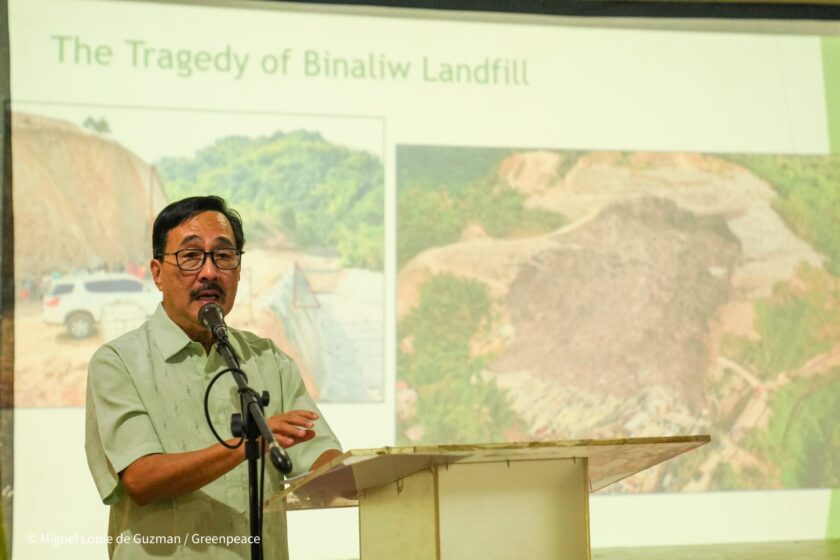
“The causes of collapse may also be due to poor operation. For example, building up waste piles that are very steep and excessive heights, or insufficient compaction, which leaves many voids in the waste, resulting in poor cohesion of the waste particle, which also lowers the shear strength,” he said.
He added that landfill failures may also stem from design issues, such as weak foundations, inadequate gas collection systems, and insufficient leachate removal, all of which contribute to structural instability.
These issues, he noted, were reportedly present in the Binaliw landfill facility. He also pointed out that excessive waste intake contributed to the abnormal height of the garbage pile.
“The steeper the angle of the pile, the slope angle, means that you can deposit more. But the problem is the steeper the angle means the higher the risk of collapse. Another problem is having too much plastic waste in a landfill, because plastics have a low density. They do not compact well, creating weak layers,” he said.
He further emphasized that such excessive height should not occur, as proper landfill management requires daily cover to prevent rainwater from saturating waste.
Failure in waste governance
The experts maintained that the collapse was not an isolated incident but a symptom of broader systemic failure in waste governance.
For Atty. Gloria Estenzo Ramos, vice president of Oceana in the Philippines, an advocacy organization centered on ocean conservation, and a former collaborator with the Philippine Earth Justice Center, what happened in Binaliw reflects “injustice and a failure of governance,” as environmental issues are inherently governance issues.
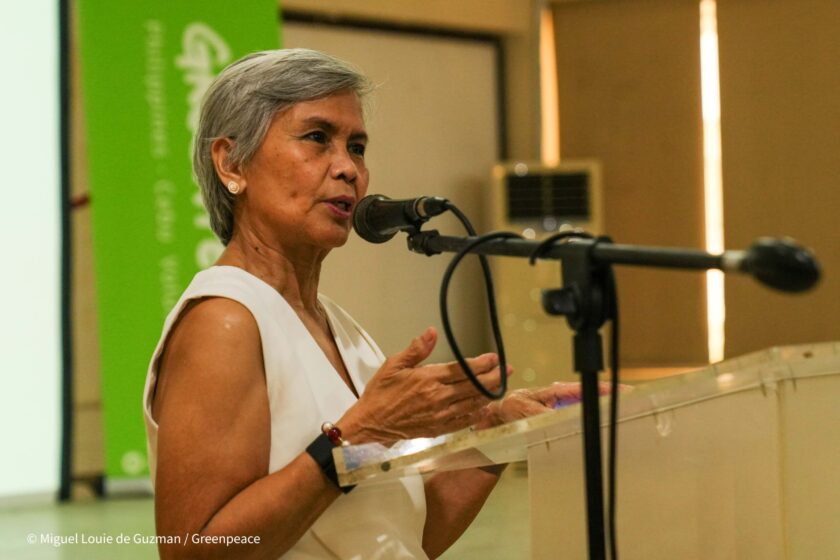
Following the Payatas tragedy, Republic Act 9003, or the Ecological Solid Waste Management Act of 2000, was enacted. Ramos believes that had this law been properly implemented, the landslide in Cebu could have been prevented.
The violation of this law, she said, led to the excessive buildup of waste and accumulation of waste that should have already triggered closure, as open dumpsites are illegal.
“Talking about an open dumpsite, that’s illegal per se. Referring to the earlier reports of Hoiwie, operating an open dumpsite is a prohibited act under Republic Act 9003 and should have been stopped and should have been a cause for issuing of a cessation order,” she said.
Junel Arcilla, a resident of Barangay Binaliw 1, the area closest to the landfill, said they had long filed complaints regarding the alarming buildup of garbage.
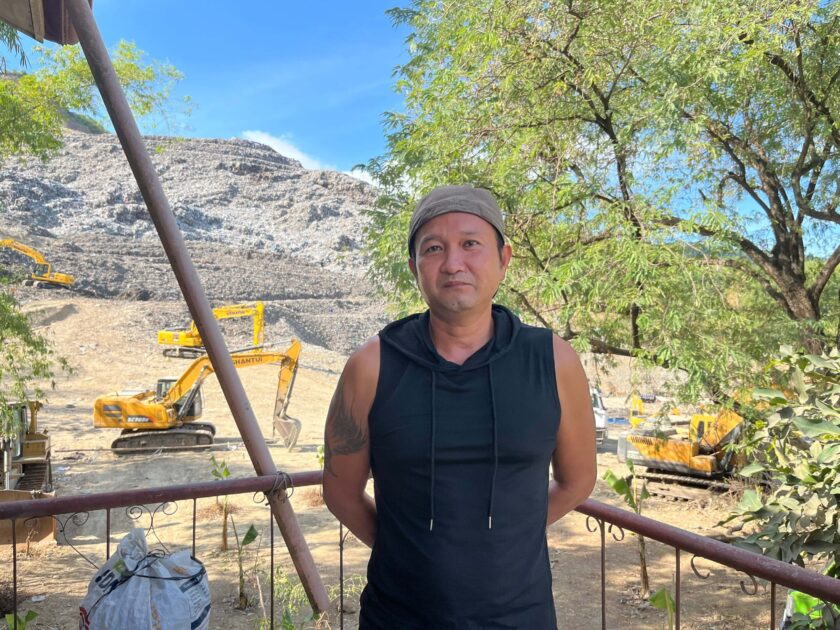
He added that since returning to the country in March 2025 as an overseas Filipino worker, he and his family have endured persistent foul odors from the site.
“There were no face masks or PPE given to us and we have to sleep with two to three layers of masks yet amid such complaints we’ve raised, I don’t think there are any plans to do a thorough investigation because we did not receive any compensation all this time,” he said.
He added that Prime Waste never formally reached out to his family regarding pressing concerns, including contamination of nearby water sources. The only assistance they received was limited water supply, which was insufficient for their daily needs.
Arcilla also raised alarm over visible leachate leakage in nearby areas. He said residents from Barangay Panoypoy in the Municipality of Consolacion have similarly raised concerns about its impact on their water sources and health.
He added that the resumption of operations reflects misplaced priorities, favoring commercial interests over the welfare of affected communities.
“This landfill activity should be stopped because this was not handled well, and they have violated permits given by the DENR. Their permit is questionable because many residents nearby have seen leachate presence for years now,” he said.
For Ramos, mechanisms for accountability must be enforced. Failures in implementing RA 9003 should trigger “culpability of government officials and agencies” responsible for the disaster.
Emmanuel added that justice will only be achieved through a thorough and transparent investigation, one that ensures accountability and prevents similar incidents in the future.
Since its establishment, the landfill has significantly altered the daily lives of nearby residents. For Melon Pan, these changes have been overwhelmingly negative, as their concerns have largely gone unaddressed.
She cited persistent odor and fly infestation as major health concerns, noting that the smell resembles strong chemicals and has caused recurring stomach pains and headaches.
A former farmer, Pan also expressed concern that leachate may have degraded soil quality in the barangay.
Calls for accountability continue

Pan was among the residents who spearheaded a signature campaign urging Prime Waste to address their concerns and conduct a public forum. However, management did not respond.
On March 7, she and other residents held a rosary and candle-lighting vigil to honor those who lost their lives in the landslide.
She said their campaigns continue, to hold the corporation accountable and to demand medical assessments for residents affected by the landfill’s operations.
On April 27, following the partial resumption of landfill operations, AMA Sugbo – KMU filed a Freedom of Information (FOI) request with DENR, seeking transparency in the ongoing investigations about the concerns over labor, environmental, and health issues.
The group filed the said FOI because the resumption meant landfill workers will be at risk again. DENR acknowledged the request and stated that a response would be issued within three days.
Despite ongoing discussions on solutions, Villacrusis emphasized that the pursuit of justice must remain central.
Emmanuel also called for accountability not only from corporations but also from institutions responsible for enforcing labor protections, and pushed for the passage of a Magna Carta to safeguard the rights of waste workers.
Villacrusis urged continuous review of systemic failures and immediate efforts toward environmental and community rehabilitation.
He said that the government must be reminded that waste management should be treated as a public service, not a compromise with private entities. (RTS, RVO)
The post Binaliw landfill reopens amid unresolved issues after landslide appeared first on Bulatlat.


Leave a Comment